Services
Resources

On 26 March 2026, while most global allocators were still recalibrating their Gulf exposure in the face of heightened regional tensions, the world's largest alternative asset manager wrote a $250 million cheque into Abu Dhabi. Blackstone's investment into Advanced Digital Gaming Technology landed less than four weeks into a sharp regional escalation — precisely the window in which textbook risk models predict institutional capital pauses, re-underwrites, and walks away from deals close to signing. Blackstone did the opposite. And they chose to announce it publicly.
This is the loudest single data point in UAE deal flow this year, and it deserves to be read carefully. Blackstone is not an emerging-market tourist. The firm manages more than a trillion dollars and answers to some of the most cautious institutional LPs on earth. When it deploys a quarter of a billion dollars into a jurisdiction that most peers are still sitting out, the decision carries informational weight far beyond the cheque size. The story is not really about gaming, payments, or even Blackstone. The story is about what global capital sees in the UAE that the headlines miss.
The structure is worth understanding before the interpretation. Blackstone committed $250 million to Advanced Digital Gaming Technology, or ADGT, a newly formed Abu Dhabi–headquartered platform built to deliver payments and compliance infrastructure for regulated digital markets. The platform was formed alongside Raya Holding, NRT Technology and Sightline Payments, with an initial focus on the UAE, the wider Middle East and Africa, and select international corridors.
ADGT is not just any payments venture. In the UAE specifically, it is the only licensed platform able to contract directly with both land-based venues and online digital platforms in the country's commercial gaming market. Hold that detail. It will matter shortly.
The transaction values ADGT at roughly $1 billion — meaning Blackstone seeded a unicorn in the Gulf during a period of active regional escalation. It is one of the first inbound private equity investments into the UAE since the start of the conflict. Blackstone's president Jon Gray was unambiguous about the rationale, telling press the firm sees major room to deploy capital at scale in the UAE despite near-term headwinds.
This was not a small allocation from a non-core fund. This was the world's most-watched buyout firm planting a flag.
Reasonable people can argue about whether $250 million is a large or small commitment in private equity terms. In Blackstone's universe, it is not a defining cheque. What is defining is the timing — and the fact that they chose to publicise it.
Private equity behaviour during geopolitical stress is highly informative. The firms with the deepest research benches, the most sophisticated risk models, and the most exposure to sovereign reputational consequences typically sit on their hands when uncertainty spikes. They wait. They re-underwrite. They walk away from term sheets that were close to signing. The pattern in Q2 2026 across most emerging markets has followed this script.
The UAE has not. The Blackstone announcement was followed within days by news that Vault22, an AI-powered wealth platform backed by Standard Chartered Ventures and Franklin Templeton, was also launching in the UAE that same week. The fintech deal pipeline, in other words, did not freeze. It re-priced and continued.
When the most conservative pools of institutional capital on the planet keep underwriting a jurisdiction during active regional escalation on its border, they are telling you something about their long-term view. That view is the asset SVG's clients should be reading most closely.
One investment is an anecdote. A pattern is a thesis. And the Blackstone–ADGT deal sits inside a pattern that has been building for at least eighteen months.
In October 2025, Blackstone partnered with Abu Dhabi's Lunate to create Gulf Logistics Infrastructure Development Enterprise — branded "Glide" — targeting roughly $5 billion of grade-A logistics assets across the GCC. A month earlier, Blackstone had teamed with Permira to invest $525 million in Dubai-based Property Finder. Three Blackstone-led platforms in roughly six months, two of them measured in billions, all focused on building rather than extracting.
The pattern is not Blackstone-specific. In late March, Mubadala and KKR announced their exit from CoolIT Systems — a liquid cooling provider for data centres — at a valuation of $4.75 billion, returning roughly fifteen times their invested capital. That is the kind of multiple that re-rates an entire allocation strategy. Sovereign LPs noticing fifteen-bagger exits coming out of the GCC are very different LPs from the ones who treated the region purely as a source of capital five years ago.
Carlyle is moving in the same direction. In early February, Reuters reported Carlyle was in preliminary talks with Mubadala, IHC, and XRG to bring in UAE co-investors for a proposed acquisition of Lukoil's international assets, with the portfolio estimated at around $20 billion. Whether that specific transaction closes is almost beside the point. What matters is that Western private equity now reflexively reaches for Abu Dhabi when it needs anchor capital and political insulation on a complex global deal.
And the homegrown side has matured. Mubadala and ADIA are now among the biggest global investors in private credit, partnering with firms like Apollo, Blue Owl, and KKR. The capital relationship has become bidirectional. The UAE is no longer just where money comes from; it is increasingly where money goes to be deployed.
The deal flow is not happening in a vacuum. The UAE has been quietly compounding FDI growth at a pace that would be the lead story in any other jurisdiction.
According to the UAE Foreign Direct Investment Report 2025, FDI inflows into the UAE grew 48.7 percent during 2024, reaching $45.6 billion compared with $30.7 billion in 2023. A near-fifty-percent jump in inbound capital, in a single year, in a country whose entire FDI book five years ago was less than half that figure. The same report ranks the UAE first in the Arab region and tenth globally for FDI attraction.
Greenfield activity tells the same story. Dubai retained its position as the leading global city for attracting greenfield FDI projects in the first half of 2024, accounting for a 6.2 percent share of the global total. Not the leading Gulf city. Not the leading regional city. The leading global city.
Real estate, often the cleanest proxy for capital sentiment, confirms the picture. Dubai's real estate market closed 2024 with around 226,000 transactions worth approximately AED 761 billion, a 36 percent rise in volume. Wealth migration is on the same trajectory. The UAE was projected to welcome roughly 9,800 millionaires in 2025, while traditional wealth centres such as the UK saw record outflows.
The forward number to anchor on is the policy target. Under the National Investment Strategy 2031, the UAE is aiming to double cumulative FDI between 2025 and 2031, lift FDI's share of the economy from 15 to 30 percent, and triple the cumulative FDI balance to AED 2.2 trillion by 2031. That is not aspiration. That is a published industrial plan with sovereign capital aligned behind it.
The interpretive question is not whether the UAE is attracting capital. The data settles that. The interpretive question is why — and the answer is more strategic than the usual talking points about tax and weather.
Three structural reasons are doing the work.
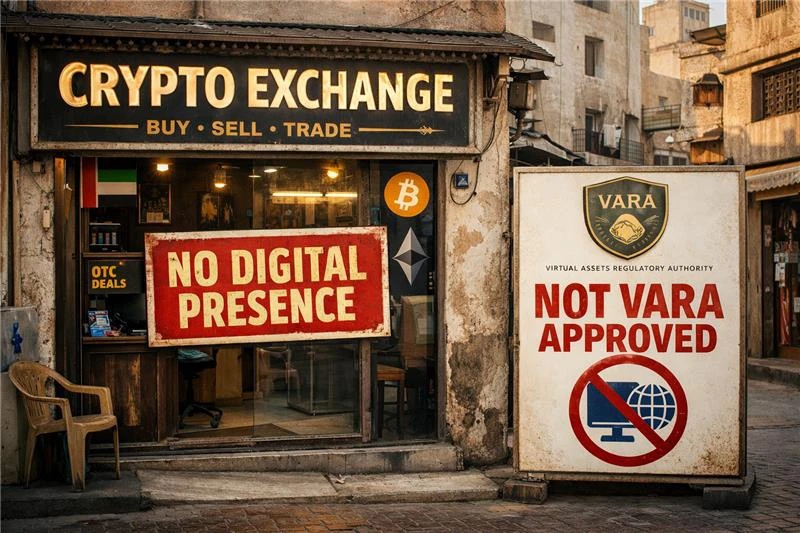
The first is regulatory clarity. The UAE has built the most differentiated and most internally coherent regulatory architecture in the region. VARA for virtual assets. DFSA inside the DIFC. FSRA inside ADGM. SCA at the federal level. CBUAE for banking and payments. DHA for healthcare. GCGRA for commercial gaming. Each regulator has a defined remit, a published rulebook, and an increasingly predictable enforcement posture. For institutional capital allocators — whose nightmare is opaque rule-making and arbitrary intervention — this is what good government looks like.
The second is geography and neutrality. Positioned between Europe, Asia, and Africa, with diplomatic relationships across blocs that few other jurisdictions can credibly claim, the UAE is increasingly a place where capital can be parked, deployed, and recycled without picking a side. The Carlyle–Lukoil discussions are a textbook example: a US asset manager needing OFAC-compliant Russian asset disposal turned first to Abu Dhabi for partnership. There is no other Gulf jurisdiction where that conversation could plausibly start.
The third is the maturation of the capital stack itself. The UAE now has sovereign wealth funds with global LP reach, family offices with permanent capital, a deepening private credit market, a working VARA regime for digital assets, an ADGM that has positioned itself as a hub for private credit alongside global asset managers, and a regulatory pipeline for sectors most jurisdictions are still arguing about. This is the difference between a market that is hot and a market that is structurally arriving.
This is the single sentence from the Blackstone deal that founders, CFOs, and compliance officers operating in the UAE should print and pin to the wall: ADGT is the only licensed platform able to contract across both physical and online channels in the country's commercial gaming market.
Read it again. Blackstone did not pay $250 million for technology that anyone else could build. They paid for technology plus a licence that nobody else holds. The licence is not a paperwork step that came after the investment thesis. The licence is the investment thesis.
This is the lesson the broader UAE market is in the middle of learning, sometimes the hard way. Regulatory authorisation in the UAE is no longer a cost centre. It is increasingly the durable competitive moat — the thing that turns a general-purpose product into a category-defining platform that institutional capital is willing to pay nine- and ten-figure cheques for.
The same logic is playing out across every regulated vertical. The UAE issued its national gaming framework in 2024, and the GCGRA has since awarded the country's first lottery licence to The Game alongside vendor approvals to operators including Aristocrat. Look at VARA's licensed VASPs, DFSA-authorised firms in the DIFC, FSRA-permissioned entities in ADGM, CBUAE-licensed payment service providers — every one of these letters of authorisation is now an asset on a balance sheet that strategic acquirers will pay a premium to inherit.
For founders and operators, this changes the order of operations. Build first, license later was the start-up cliché of the last decade. In the UAE in 2026, the firms attracting the most attention from institutional investors are the ones who treated the licence as the foundational primitive — designing the product, the corporate structure, the data architecture, and the compliance posture around the regulatory regime from day one.
If you are running a fintech, a digital asset business, a healthcare platform, an OTC desk, a payments venture, or any cross-border services firm in the UAE, the Blackstone–ADGT signal carries three operational implications.
First, the macro thesis is not fragile. Capital is continuing to flow in despite regional tensions. That means the cost of not being licence-ready is no longer "we miss a fundraise window." It is "we miss an entire capital cycle that is actively moving past us."
Second, regulatory positioning is now a strategic decision, not a procurement one. Choosing whether to sit under VARA versus FSRA versus DFSA, whether to structure as a free-zone or mainland entity, whether to pursue a full licence or a permission framework, whether to build for one regulator or to architect a multi-regulator stack — these decisions shape valuation outcomes. They should be made by founders and boards, not delegated downward.
Third, time-to-licence is now a board-level KPI. Every month a firm spends operating without authorisation is a month it is invisible to the kind of institutional capital that just chose Abu Dhabi over almost every other destination on earth.
We work every day with founders, family offices, and international firms trying to enter, scale, or restructure inside the UAE's regulatory architecture. Across VARA, DFSA, ADGM, SCA, CBUAE, DHA, and GCGRA, the pattern we see is consistent: the firms that treat licensing as the core strategic workstream — not the legal afterthought — are the ones positioned to receive the next wave of capital that the Blackstone signal is announcing.
The UAE is not having a moment. It is in the early innings of a structural re-rating. Smart money has voted. The question for operators on the ground is whether their licensing posture is built to receive that vote, or built to watch it pass.
If you would like to talk through where your business sits in that picture — and what the right regulatory stack looks like for what you are building — our team is here.
SecureVisa Group (SVG) is a UAE regulatory licensing consultancy with hight VARA approval rate and end-to-end coverage across the country's principal regulators. Get in touch via securevisagroup.com.